
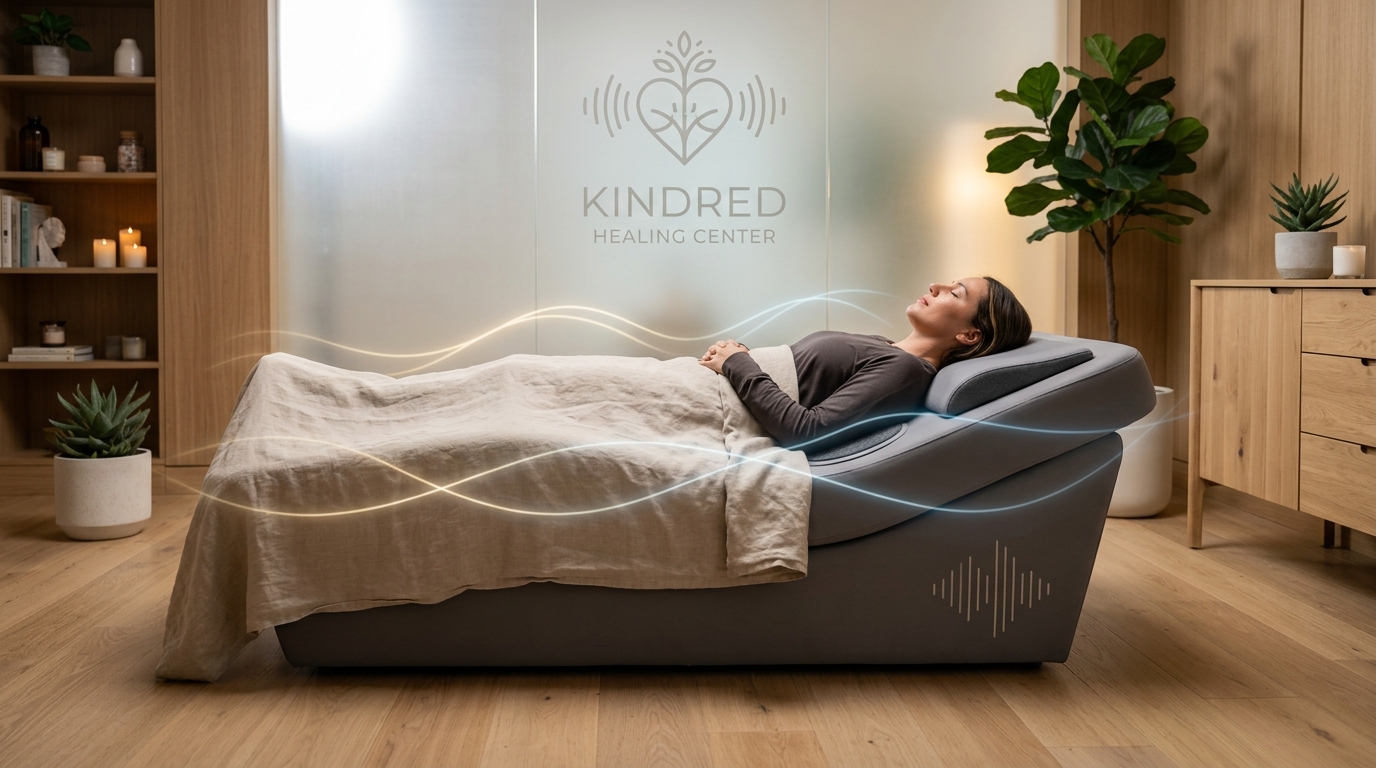
10 Benefits of Sound Bed Therapy for Relaxation & Healing
The Science of Serenity: Understanding the Benefits of Sound Bed Therapy for Relaxation
In an era defined by constant digital noise and high-stress environments, the human nervous system is frequently pushed to its limit. At Where Healing Meets Community | Kindred Healing Center, we recognize that true wellness requires more than just superficial rest; it demands a deep, cellular recalibration. This is where the benefits of sound bed therapy for relaxation come into play, offering a bridge between ancient sound healing traditions and modern vibroacoustic science.
Sound bed therapy, often referred to as vibroacoustic therapy (VAT), is not merely about listening to music. It is a multisensory experience where low-frequency sound vibrations are applied directly to the body through specially designed furniture or beds. As these waves travel through the water content of your cells, they induce a state of profound physiological and psychological harmony. Whether you are a high-performance professional looking to decompress or someone navigating chronic health challenges, understanding the transformative power of sound frequency is essential to your holistic journey.
How Vibroacoustic Technology Works
Before diving into the specific benefits, it is crucial to understand the mechanics. Sound travels four times faster through water than through air. Since the human body is composed of approximately 60-70% water, it acts as a perfect conductor for vibrational frequencies. When you lie on a sound bed, you are essentially receiving a cellular-level massage. At Kindred Healing Center, we integrate these advanced modalities through vibroacoustic therapy at pHrequency ATL, ensuring that our community has access to the cutting edge of sound science.
The Power of Frequency Entrainment
Frequency entrainment is the process where the body’s internal rhythms—such as heart rate, breath, and brainwaves—synchronize with the external frequencies produced by the sound bed. Typically, these beds use frequencies between 30Hz and 120Hz. Research indicates that 40Hz, in particular, is highly effective for stimulating the brain and supporting cognitive function, while lower frequencies are ideal for deep muscle relaxation and stress reduction.
10 Core Benefits of Sound Bed Therapy for Relaxation
1. Deep Nervous System Regulation
The primary benefit of sound bed therapy for relaxation is its ability to shift the body from the sympathetic nervous system (fight or flight) to the parasympathetic nervous system (rest and digest). By bypassing the conscious mind and speaking directly to the autonomic nervous system through vibration, sound beds can lower cortisol levels more rapidly than traditional meditation alone.
2. Reduced Muscle Tension and Physical Pain
Vibroacoustic therapy acts as a mechanical massage. The gentle oscillations help to increase blood flow and lymphatic drainage. This is particularly beneficial for those with fibromyalgia, arthritis, or chronic back pain. The vibrations help to relax hypertonic muscles, providing a non-invasive method for pain management.
3. Enhanced Sleep Quality
By promoting the production of serotonin and melatonin while reducing the physiological markers of stress, sound bed therapy prepares the body for deep, restorative sleep. Regular users often report falling asleep faster and experiencing fewer nighttime disruptions.
4. Improved Circulation and Nitric Oxide Production
Data suggests that low-frequency sound stimulation can trigger the release of nitric oxide in the body. Nitric oxide is a vasodilator, meaning it helps to open blood vessels, improving circulation and oxygen delivery to vital organs. This is a key component of the benefits of sound bed therapy for relaxation, as improved blood flow naturally reduces the physical sensation of stress.
5. Mental Clarity and Reduced Brain Fog
Through brainwave entrainment, sound beds help transition the mind from high-frequency Beta waves (associated with anxiety and active thinking) to Alpha and Theta waves (associated with deep relaxation and creativity). This shift clears the mental clutter, allowing for greater focus and emotional resilience.
6. Emotional Release and Trauma Processing
Many practitioners in our Practitioners Directory utilize sound as a tool for emotional somatic work. Sound vibrations can help "unlock" stored tension in the fascia, which is often where the body holds onto emotional trauma. This creates a safe container for emotional processing without the need for immediate verbalization.
7. Synchronization of the Body’s Energy Centers
While the science focuses on cells and nerves, the holistic perspective acknowledges the alignment of the body's energy centers. Sound bed therapy helps to harmonize the subtle energy bodies, leading to a feeling of being "grounded" and centered within oneself.
8. Support for Respiratory Health
The rhythmic vibrations of a sound bed can help loosen secretions in the lungs and encourage deeper, more diaphragmatic breathing. This is a foundational element of relaxation, as the breath is the most direct link we have to our internal state of calm.
9. Increased Mind-Body Connection
In our modern world, many of us live "from the neck up." Sound bed therapy forces a reconnection with the physical self. Feeling the music as much as hearing it creates a heightened state of somatic awareness, which is essential for long-term wellness.
10. Accelerated Recovery for Athletes
For those focused on physical performance, sound bed therapy reduces the recovery time between intense workouts by mitigating delayed onset muscle soreness (DOMS) and reducing inflammation through enhanced lymphatic flow.
Comparison: Sound Bed Therapy vs. Traditional Meditation
| Feature | Traditional Meditation | Sound Bed Therapy (VAT) |
|---|---|---|
| Effort Required | High (Mental discipline) | Passive (Effortless) |
| Physical Sensation | Minimal | Deep Cellular Vibration |
| Time to Reach Delta/Theta | 20–40 Minutes | 5–10 Minutes |
| Accessibility | Requires practice | Accessible to all mobility levels |
| Primary Focus | Mindfulness | Physiological Reset |
The Kindred Approach to Holistic Wellness
At Where Healing Meets Community | Kindred Healing Center, we believe that no modality exists in a vacuum. The benefits of sound bed therapy for relaxation are amplified when integrated into a broader wellness plan. Our center provides a sanctuary where these advanced tools are paired with a supportive community. Whether you are exploring comprehensive services for clients or looking to host a wellness event, our facility is designed to foster both individual and collective healing.
A Framework for Your First Sound Bed Session
- Intention Setting: Before beginning, identify a specific area of tension or a mental state you wish to achieve.
- Hydration: Because sound travels better through water, being well-hydrated enhances the efficacy of the vibrations.
- Breath Integration: As the session starts, sync your breath with the low-frequency pulses to accelerate the entrainment process.
- Integration Period: After the session, take 5–10 minutes to remain still, allowing the nervous system to "save" the new state of relaxation.
Why Practitioners Choose Kindred for Sound Work
Practitioners who specialize in vibroacoustic and sound healing require a space that matches the frequency of their work. Kindred Healing Center offers a purpose-driven environment where healers can thrive. By providing access to high-quality equipment and a collaborative atmosphere, we ensure that the benefits of sound bed therapy reach as many people as possible in the Atlanta community.
Industry Data on Sound Healing
Recent studies in the field of music medicine indicate that vibroacoustic therapy can reduce self-reported pain levels by up to 40% in patients with chronic conditions. Furthermore, clinical trials have shown a significant reduction in tremors for patients with Parkinson’s disease when exposed to 40Hz sound vibration, highlighting the therapeutic potential that goes far beyond simple relaxation.
Frequently Asked Questions
How long does a sound bed therapy session last?
Most sessions last between 30 and 60 minutes. Even a short 20-minute session can provide significant nervous system regulation, though longer sessions allow for deeper cellular impact and emotional integration.
Is sound bed therapy safe for everyone?
While generally safe, individuals with pacemakers, recent surgical implants, or certain types of epilepsy should consult with their physician before using a vibroacoustic sound bed. We always recommend a consultation with one of our experts at Kindred Healing Center to ensure the therapy is right for you.
How often should I use a sound bed for maximum results?
For chronic stress or pain, 1-2 sessions per week are often recommended. For general maintenance and relaxation, many clients find that once or twice a month provides a sufficient mental and physical reset.
Do I need to do anything special during the session?
The beauty of this therapy is its passivity. You simply lie down, relax, and let the frequencies do the work. Wearing comfortable, thin clothing can help you feel the vibrations more clearly.
Conclusion: Experience the Future of Relaxation
The benefits of sound bed therapy for relaxation represent a significant leap forward in holistic health. By leveraging the fundamental laws of physics and biology, we can achieve states of calm that were previously difficult to reach through traditional methods. This technology does not just mask the symptoms of stress; it addresses the physiological root by harmonizing the body at a cellular level.
We invite you to experience this transformation firsthand. Whether you are looking to book a session, join our community, or find a practitioner, we are here to support your journey. To learn more or to schedule your initial consultation, please contact Kindred Healing Center today and take the first step toward a more resonant, relaxed life.