
7 Benefits of Sound Bed Therapy for Stress Relief: A Guide
The Science of Sound: How Vibroacoustic Therapy Transforms Stress Management
In our modern, high-speed society, the sympathetic nervous system—responsible for our 'fight or flight' response—is often stuck in overdrive. This chronic state of arousal leads to elevated cortisol levels, disrupted sleep, and a sense of emotional exhaustion. For those seeking a sanctuary from the noise, the benefits of sound bed therapy for stress relief offer a revolutionary, non-invasive path back to equilibrium. At Where Healing Meets Community | Kindred Healing Center, we believe that true restoration occurs when the body is allowed to recalibrate at a cellular level.
Sound bed therapy, technically known as vibroacoustic therapy (VAT), is not merely about listening to pleasant music. It is a scientifically grounded modality that uses low-frequency sound vibrations to massage the body from the inside out. By combining tactile vibration with auditory frequencies, sound beds bypass the logical mind and speak directly to the autonomic nervous system, providing immediate and profound relief from the physical and mental manifestations of stress.
Understanding the Mechanics of Vibroacoustic Therapy
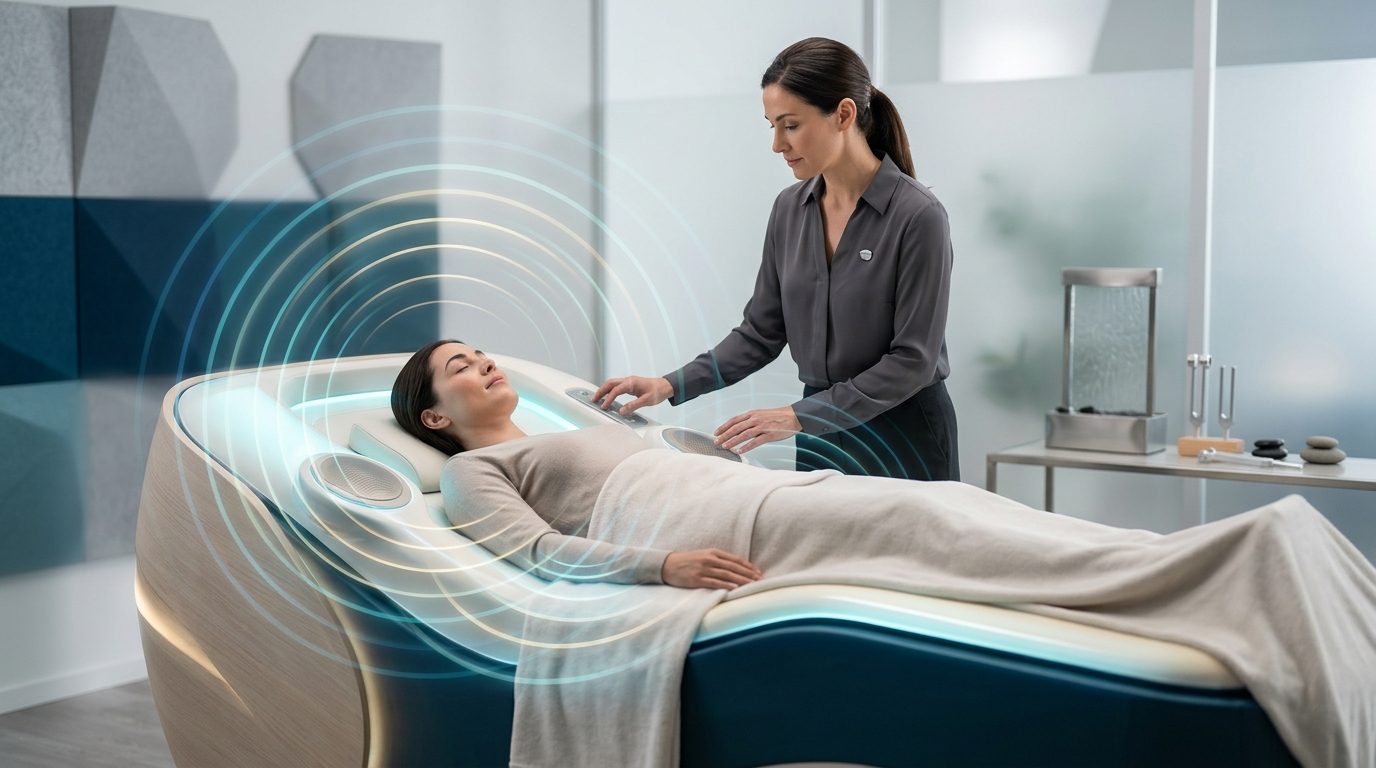
Before diving into the specific advantages, it is essential to understand how sound beds operate. Unlike traditional sound baths where instruments are played in the room, a sound bed incorporates transducers—high-quality speakers that transmit physical vibrations—directly into the surface upon which you lie. As you rest, these vibrations travel through the water-filled tissues of your body.
The Physics of Cellular Resonance
Human beings are composed of approximately 60-70% water. Physics dictates that sound travels four times faster through water than through air. When you engage in a session at pHrequency ATL within our center, the frequencies are literally vibrating every cell, organ, and bone in your body. This resonance helps to break up energetic blockages and physical tension that have been stored over years of high-stress living.
Brainwave Entrainment
Another key mechanism is brainwave entrainment. When the brain is exposed to a rhythmic stimulus, it naturally begins to synchronize its own electrical cycles to that rhythm. Sound bed therapy typically utilizes frequencies that encourage the brain to move from Beta (active, alert, or stressed state) into Alpha (relaxed awareness) and eventually Theta (deep meditation or light sleep). This transition is the cornerstone of why the benefits of sound bed therapy for stress relief are so immediate and lasting.
The Primary Benefits of Sound Bed Therapy for Stress Relief
1. Deep Nervous System Regulation
The most significant of the benefits of sound bed therapy for stress relief is its ability to stimulate the vagus nerve. The vagus nerve is the longest nerve of the autonomic nervous system and is the primary driver of the 'rest and digest' (parasympathetic) response. By applying specific low frequencies to the body, sound bed therapy 'tones' the vagus nerve, helping your body return to a state of calm more efficiently after stressful events.
2. Reduction of Cortisol and Stress Hormones
Clinical studies have shown that vibroacoustic therapy significantly reduces blood levels of cortisol, the body's primary stress hormone. High cortisol levels are linked to weight gain, high blood pressure, and impaired immune function. Regular sound bed sessions act as a metabolic 'reset' button, lowering these markers and allowing the body's natural healing mechanisms to take over.
3. Myofascial Release and Physical Tension Reduction
Stress often manifests as physical pain—specifically in the neck, shoulders, and lower back. Traditional massage focuses on the manipulation of the outer layers of muscle. In contrast, the vibrations from a sound bed penetrate deep into the myofascial tissue, vibrating the tension away at a depth that manual therapy often cannot reach. This makes it an ideal complement to the work done by the professionals found in our practitioners directory.
4. Enhanced Sleep Quality and Circadian Rhythm Support
Chronic stress is the leading cause of insomnia and poor sleep quality. By facilitating the transition into Theta and Delta brainwave states, sound bed therapy helps 'teach' the brain how to shut down and enter deep restorative sleep. Clients often report that following a session, they experience their most profound sleep in months, characterized by fewer middle-of-the-night awakenings.
5. Emotional Processing and Trauma Release
Stress is rarely just physical; it is often tied to emotional experiences and suppressed trauma. The gentle, consistent vibration of sound bed therapy provides a 'safe container' for the body to release stored emotional energy. This somatic approach to wellness allows for emotional processing without the need for immediate verbalization, making it a powerful tool for those who find traditional talk therapy overwhelming.
6. Improved Circulation and Lymphatic Drainage
Stress causes the blood vessels to constrict and the lymphatic system to become sluggish. The mechanical vibrations of VAT act as a pump for the lymphatic system, encouraging the removal of toxins and metabolic waste. Improved circulation ensures that oxygen and nutrients are delivered more effectively to tissues that have been starved by stress-induced tension.
7. Cognitive Clarity and Focus
When the 'noise' of stress is removed, the mind regains its ability to focus. One of the most underrated benefits of sound bed therapy for stress relief is the 'mental decluttering' that occurs. By quieting the amygdala—the brain's fear center—VAT allows the prefrontal cortex to come back online, improving decision-making and creative problem-solving.
Comparing Sound Bed Therapy to Other Stress-Relief Modalities
To help you determine if this is the right path for your wellness journey, we have outlined how sound bed therapy compares to other common stress-reduction techniques.
| Modality | Primary Mechanism | Client Effort Level | Depth of Tissue Impact |
|---|---|---|---|
| Sound Bed Therapy | Vibroacoustic Resonance | Passive / Low | Cellular / Full Body |
| Traditional Massage | Manual Manipulation | Passive | Muscular / Surface |
| Meditation | Focused Awareness | Active / High | Neurological |
| Flotation Therapy | Sensory Deprivation | Passive | Neurological / Skin |
The Kindred Healing Center Approach to Sound Therapy
At Kindred Healing Center, we recognize that healing does not happen in a vacuum. While the benefits of sound bed therapy for stress relief are powerful on their own, they are amplified when experienced within a supportive, purpose-driven community. Our sanctuary is designed to be a landing pad for both clients seeking deep rest and practitioners who are experts in their craft.
Our sound therapy sessions are integrated into a broader holistic ecosystem. We often encourage clients to combine their sound bed experience with other modalities found within our center to create a comprehensive wellness plan. Whether you are a practitioner looking to host a session via our event rental space or a client seeking a one-on-one breakthrough, the frequency of community is what sets us apart.
The 4-Step Process: What to Expect During Your Session
If you are new to the world of vibroacoustic therapy, it is natural to wonder what the experience is actually like. We utilize a specific framework to ensure you maximize the benefits of sound bed therapy for stress relief.
Step 1: The Intention Setting
Before you lie down, your practitioner will help you settle into the space. Setting an intention—whether it is to release a specific worry or simply to remain present—primes the brain to be more receptive to the frequencies.
Step 2: Sensorial Integration
You will lie on the specialized sound bed, often with headphones and sometimes an eye mask. As the session begins, you will feel a gentle hum beneath you. This is the 'entry point' where your body begins to recognize the vibration as a safe, soothing stimulus.
Step 3: Deep Resonant Immersion
As the frequencies shift, you will feel the vibrations moving through different parts of your body—chest, limbs, and spine. During this phase, most clients experience a loss of 'body boundaries,' where they feel as though they are floating. This is the physiological sign that the sympathetic nervous system has successfully yielded to the parasympathetic state.
Step 4: The Integration Period
After the sound ceases, we allow for several minutes of silence. This 'the gap' is crucial. It is during this time that the nervous system stabilizes in its new, relaxed state. You will leave the session feeling 'grounded yet light,' a unique sensation characteristic of sound bed therapy.
Industry Insights: Why Sound Healing is the Future of Stress Management
Data from the American Psychological Association (APA) indicates that stress levels are at an all-time high, with a significant portion of the population reporting physical symptoms like headaches and fatigue. Consequently, the global wellness industry is seeing a shift toward 'passive wellness'—modalities that require little effort from the client but provide high neurological impact.
Vibroacoustic therapy is at the forefront of this shift. Research conducted by organizations like the National Institutes of Health (NIH) has explored VAT's effectiveness in treating conditions ranging from fibromyalgia to Parkinson’s disease, noting its ability to reduce muscle tremors and chronic pain. By addressing the root cause of stress—nervous system dysregulation—the benefits of sound bed therapy for stress relief provide a sustainable solution rather than a temporary fix.
Frequently Asked Questions About Sound Bed Therapy
Is sound bed therapy safe for everyone?
While sound bed therapy is generally very safe, it is contraindicated for individuals with pacemakers, those who are pregnant, or individuals who have recently undergone major surgery with internal hardware. We always recommend consulting with your healthcare provider and our practitioners at Kindred Healing Center before starting a new modality.
How many sessions do I need to see results?
Many clients experience a significant reduction in stress after just one session. However, for chronic stress management and long-term nervous system regulation, a series of 4-6 sessions spaced weekly is typically recommended to 'train' the nervous system to remain in a relaxed state.
Does it feel like a vibrating chair or a massage?
No, the sensation is much more subtle and fluid. Instead of a mechanical 'thumping' or 'kneading,' it feels like a deep, harmonic hum that moves through you. It is often described as feeling like you are 'becoming the music.'
Can sound bed therapy help with anxiety?
Yes. Anxiety is often the result of the brain's fear center (the amygdala) being overactive. The low-frequency vibrations used in sound bed therapy help to quiet this area of the brain, providing a sense of safety and calm that can significantly reduce the symptoms of generalized anxiety.
Conclusion: Reclaim Your Peace at Kindred Healing Center
The journey to wellness does not have to be a struggle. By leveraging the benefits of sound bed therapy for stress relief, you are choosing a path of ease, resonance, and deep biological restoration. At Where Healing Meets Community | Kindred Healing Center, we are dedicated to providing the tools and the community necessary for your transformation.
Whether you are a practitioner looking to expand your offerings or a client ready to shed the weight of chronic stress, our doors are open. Experience the power of frequency and the warmth of community in a space designed for your highest well-being.
Are you ready to experience the deep resonance of healing? Contact us today to schedule your session or tour our facility. Let us help you find the harmony your body has been searching for.